IJsselstein, Friday, 28 January 2011 04:15:46
This page shows the old, currently no longer valid banknotes of the Philippines. Do not accept these (except if you like to keep them as a souvenir).
In December 2010, a new series of banknotes was introduced. The old banknotes are no longer legal tender since 1 January 2016, and lost all their value on 1 January 2017.
(Click on the notes for a larger image.)
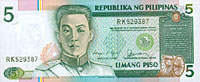
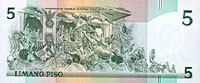
The old 5 peso note depicts Emilio Aguinaldo, a Philippine resistance hero who first fought the Spanish, and later the American occupiers of the country. The first president of the Philippines. On the reverse you can see the proclamation of Philippine independence, from the balcony of Aguinaldo's house. This note has been replaced by a 5 peso coin.
The old 10 peso note depicts Apolinario Mabini and Andres Bonifacio. There used to be an even older version with only Mabini. On the reverse is the church of Barasoain.
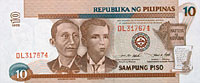
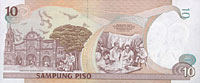
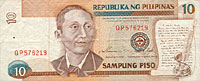
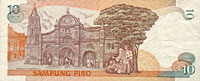
This note has been replaced by the bimetallic 10-peso coin.
The old 20 peso note depicts Manuel L. Quezon. On the reverse you can see the Presidential Palace, the Malakaņang.
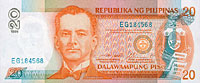
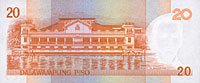
The old 50 peso note depicts Sergio Osmeņa. On the reverse you can see the Executive House.
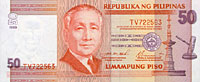
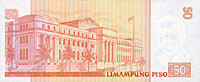
The old 100 peso note depicts Manuel A. Roxas. On the reverse you can see the buildings of the Philippine National Bank.
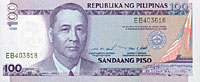
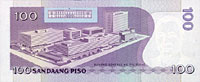
Introduced in 2002, the old 200 peso note commemorated the the June 12 Independence Day, and the EDSA II uprising. It depicts president Diosdado Macapagal, the father of the current president, Gloria Macapagal Arroyo, who is also depicted on the back of the note.
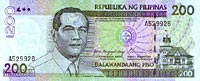
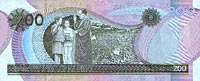
The old 500 peso note depicts Beningno S. Aquino Jr.
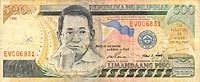
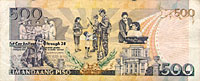
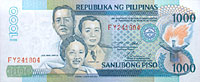
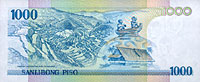
The old 1000 peso note depicts Jose Abad Santos, Vincent Lim, and Josefa Llanes Escoda. On the reverse you can see the rice terasses in Banawe, and some tribal artifacts.
Jeroen Hellingman